My parents recently got back from a two-week trip to Alaska.
While in Alaska, they saw some glaciers. I remembered that in An Inconvenient Truth, Al Gore mentioned how some glaciers in the Alps have retreated quite a bit within the historical record, showing pictures from the late 19th century and comparing them to modern-day photographs. It turned out that some of the glaciers there have receded within the memory of the people who live there, but others have actually advanced.
It seems to me that the only way to know for sure if global warming is causing glaciers to retreat is to analyze a large number of them for which there is a historical record. (Although I'm not a climatologist, the Alps seem like the best site for such a study simply because people have been living there for quite some time.) Anecdotal evidence just isn't valid here. However, it seems like there are better ways of tracking temperature than looking at glaciers (for example, just looking at actual temperature numbers!) and so the glaciers are more a convenient symbol than anything, because miles-long ice formations seem like something that humans just couldn't possibly melt! What one person knows is simply an inadequate sample, although it can make for a powerful story.
The news of the moment regarding Al Gore and global warming seems to be that the snows of Kilimanjaro are retreating, but that's not due to global warming but rather due to a comparatively dry weather period over the last century or so. The retreat began about a hundred years ago, whereas global warming didn't really become a big effect on climate until maybe forty or fifty years ago. The ice on Kilimanjaro is sublimating, not melting. Philip Mote of the University of Washington has said that Gore shouldn't use Kilimanjaro as a symbol for global warming, as he has in the past. He suggests that [t]here are dozens, if not hundreds, of photos of midlatitude glaciers you could show where there is absolutely no question that they are declining in response to the warming atmosphere,". I agree. Scientists are often blind to the power of good symbols in getting across their message to non-scientists.
Mathematicians, more so.
Showing posts with label Al Gore. Show all posts
Showing posts with label Al Gore. Show all posts


16 July 2007
Al Gore and gerrymandering
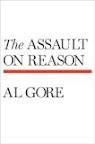

Al Gore writes in his new book The Assault on Reason
(pp. 238-239), commenting on the fact that U. S. Senators serve for longer terms (six years) than U. S. Representatives (two years):"Until recently, it followed that House seats turned over more frequently than Senate seats.
In recent years, that juxtaposition has flipped. In the four elections of the new millennium, House members have been reelected an average of 96 percent of the time, compared with Senate members, who have been reelected only 85 percent of the time, according to Rhodes Cook, an expert on election statistics. It is now statistically easier for a House member to be reelected three times in succession than it is for a senator to be reelected once. As a result, the Founder's intention that House members would be on a shorter `leash" and more responsive to the public than the Senate, has been stood on its head."
This is in a chapter in which Gore argues that a lot of what our nation's Founding Fathers stood for has been changed. You might say that it doesn't matter which house is the one that turns over quicker -- but the two chambers are not symmetric. One could distinguish a world in which the Senate was the chamber with more turnover than one in which the House was.
The mathematical content here isn't particularly strong. We can compute that the probability of a House member staying in power for six years (three House terms) is (.96)3, which is 88%; this isn't all that much more than 85%. Still, though, the conventional wisdom is that the House turns over faster than the Senate, so it surprised me to read this.
Of course, the reason why House seats turn over faster than Senate seats is due to gerrymandering. Gerrymandering, for those who don't know, is the practice of devising Congressional districts which are shaped in such a way as to take advantage of how members of the two parties are distributed in space. A particularly egregious example is the second district of Arizona, which is basically two disjoint pieces connected by the Grand Canyon. Nobody lives in the Grand Canyon, because it's a giant hole in the ground. The reason for doing this, of course, is that the people at the eastern and western ends are in the same political party.
I've seen proposals that require a certain amount of "compactness" in a district, usually measured as something like the area of a district over the square of its perimeter; the isoperimetric inequality tells us that this is minimized for a circle, and it's very large for districts like the Arizona 2nd.
There are, in fact, mathematical algorithms to abolish gerrymandering. The one that I linked to is called the "shortest splitline" algorithm; it works by splitting states up into districts by drawing lines which are as short as possible to successively divide the population in half. (I'm simplifying a bit; what I said is only strictly true if the number of districts is a power of two.) This ensures that the districts are at least convex (intuitively, this means they don't have "dents") if the state is; many of them are triangles or quadrilaterals. Since this pays absolutely no attention to the way people tend to vote, it's seen as "impartial".
I'm not sure how I feel about this, though, just because people's settlement patterns don't fall along straight lines. My instinct is to propose a system that tries not to divide counties if at all possible; historically counties in the United States are of roughly uniform size and shape (especially in sparsely settled western states like Nebraska, but even densely populated eastern states like New Jersey or Massachusetts are fairly compact. Furthermore, county lines can't be redrawn nearly as casually as congressional district lines can be. But there are plenty of counties that have a much larger population than a congressional district (roughly 700,000 at the moment), so this isn't perfect either.
Still, it's probably a lot better than the current system.
If you want to get your own experience with gerrymandering, there's something called the redistricting game which is floating around, which has been mentioned by the New York Times and Slashdot.
03 July 2007
Five dollars a year for energy independence?
In today's Philadelphia Inquirer: A tax, or any other name, would raise ire.
Pennsylvania governor Ed Rendell is attempting to create an "Energy Independence Fund" by raising the cost of electricity by $0.0005 per kilowatt-hour. The average price of electricity in Pennsylvania is between $0.09 and $0.11 per kilowatt-hour, depending on who you believe. Rendell claims that this would cost the average household "the equivalent of half a cup of coffee per month"; more precisely it's estimated that the cost of this program would be $5.40 per year for the average residential customer. (That works out to 900 kilowatt-hours per household, which is at least in the right ballpark.) This would create a fund of $850 million which would supposedly save Pennsylvanians about $1 billion per year, by encouraging the use of alternative fuels (for example, Pennsylvania has no oil, but we can grow corn for ethanol!), creating rebate programs for people who buy more efficient appliances or install solar panels, and so on.
House minority leader Sam Smith says:
What Smith is saying, it seems, is that some people use more electricity than average. But any reasonable definition of "average" has this property! Besides, we're talking about raising electricity bills by half a percent here. Al Gore supposedly uses 221,000 kilowatt-hours per year; even his bill would only go up by $9 a month or so. Besides, if this encourages people to use half a percent less electricity, it's a good idea. And in the end, people's bills will be reduced assuming these programs work out.
And I'd guess that the national average of 10,656 kilowatt-hours per year per household (as cited in the article re: Gore, and implied by the $5.40/year and $0.0005/kW-h figures) is mean use, not median use. The distribution of electricity use is probably skewed to the right, so the median is lower than the mean. (A lot of distributions which occur in economics are like this; one of the standard examples these days are real estate prices. Since there are a few really expensive houses out there, it's felt that the median is a better indicator of the market as a whole than the mean is, so the median is what's cited when people talk about whether real estate prices are rising or falling.) So you could even make the argument that Rendell is overstating the impact of the new surcharge.
In case you're wondering, I figure that this tax would cost me, directly, less than $1 a year. (Indirectly it'll cost a bit more, because the people I buy things from will also see their electricity prices raised.) I could have made more than $1 in the time it took me to read the article and write this post.
Pennsylvania governor Ed Rendell is attempting to create an "Energy Independence Fund" by raising the cost of electricity by $0.0005 per kilowatt-hour. The average price of electricity in Pennsylvania is between $0.09 and $0.11 per kilowatt-hour, depending on who you believe. Rendell claims that this would cost the average household "the equivalent of half a cup of coffee per month"; more precisely it's estimated that the cost of this program would be $5.40 per year for the average residential customer. (That works out to 900 kilowatt-hours per household, which is at least in the right ballpark.) This would create a fund of $850 million which would supposedly save Pennsylvanians about $1 billion per year, by encouraging the use of alternative fuels (for example, Pennsylvania has no oil, but we can grow corn for ethanol!), creating rebate programs for people who buy more efficient appliances or install solar panels, and so on.
House minority leader Sam Smith says:
I would venture a guess that any household of three or four with a few extra appliances or maybe air-conditioning will pay more," he said. "It's a big tax on Pennsylvanians, and he is using an average number to downplay a bigger tax than it is."
What Smith is saying, it seems, is that some people use more electricity than average. But any reasonable definition of "average" has this property! Besides, we're talking about raising electricity bills by half a percent here. Al Gore supposedly uses 221,000 kilowatt-hours per year; even his bill would only go up by $9 a month or so. Besides, if this encourages people to use half a percent less electricity, it's a good idea. And in the end, people's bills will be reduced assuming these programs work out.
And I'd guess that the national average of 10,656 kilowatt-hours per year per household (as cited in the article re: Gore, and implied by the $5.40/year and $0.0005/kW-h figures) is mean use, not median use. The distribution of electricity use is probably skewed to the right, so the median is lower than the mean. (A lot of distributions which occur in economics are like this; one of the standard examples these days are real estate prices. Since there are a few really expensive houses out there, it's felt that the median is a better indicator of the market as a whole than the mean is, so the median is what's cited when people talk about whether real estate prices are rising or falling.) So you could even make the argument that Rendell is overstating the impact of the new surcharge.
In case you're wondering, I figure that this tax would cost me, directly, less than $1 a year. (Indirectly it'll cost a bit more, because the people I buy things from will also see their electricity prices raised.) I could have made more than $1 in the time it took me to read the article and write this post.
Subscribe to:
Posts (Atom)
